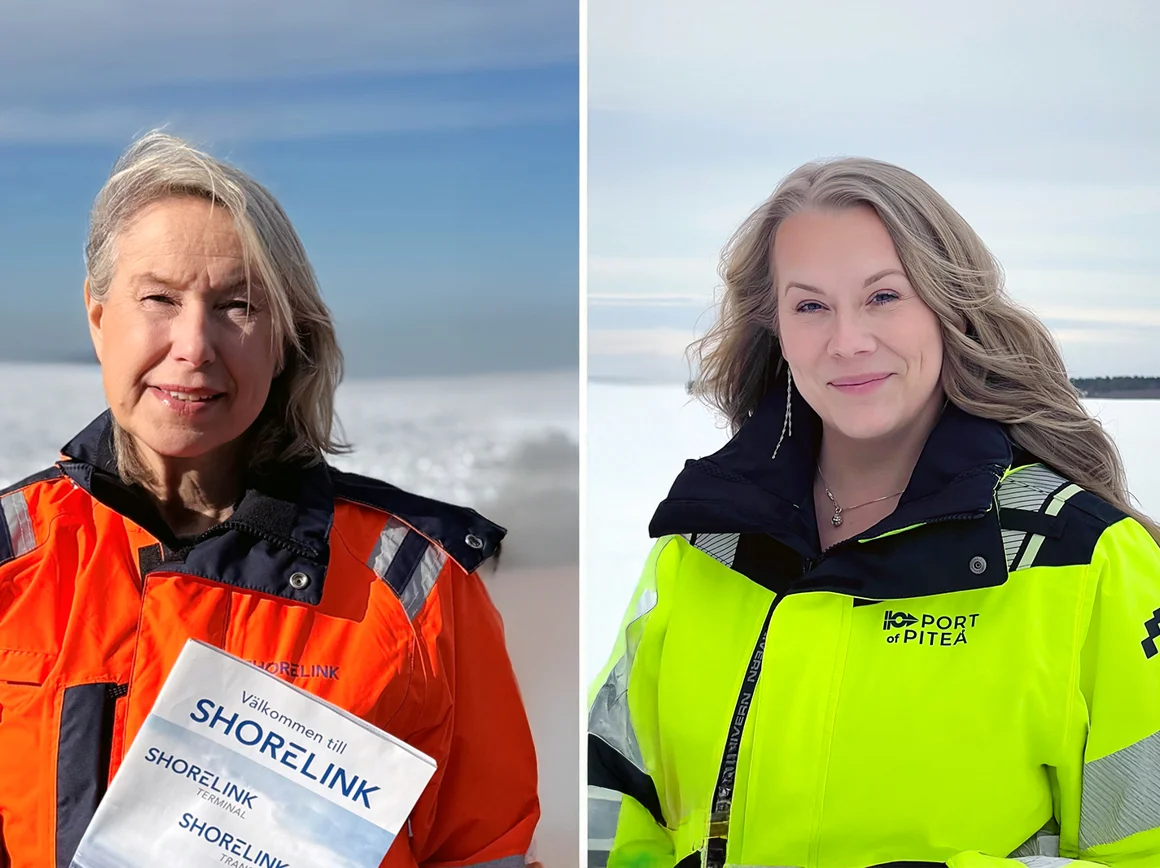
Security in ports is a current issue, not least in a troubled world where issues of infrastructure protection are widely discussed. The ports are crucial to Sweden's economy and livelihood, which places high demands on security measures and collaboration between different actors. Viktoria Mettävainio, ShoreLink, and Frida Colliander, Port of Piteå provide an insight into the daily security work.
ShoreLink and Port of Piteå collaborate to ensure safe and efficient port operations.
Security is a crucial factor for both staff and visitors, and there are several aspects to consider, including international regulations, occupational health and safety regulations, and protection against unauthorized access.
Almost 90 percent of Sweden's imports and exports go through the ports, making them a vital activity and a crucial part of the transport system. The role of the ports is not only economic but also strategic, as they play an important function for military preparedness and civil protection. Ports are also part of civil defense planning and are covered by three protection levels. Protection level 1 is the normal level and the one that applies today.
Cooperation to ensure protection
As an important part of Sweden's logistics network, ports are subject to both Swedish law and the international ISPS Code (International Ship and Port Facility Security Code). The code regulates security measures for ships and port facilities to protect against external threats. This includes remote-controlled gates, camera surveillance and manned entry and exit.
To maintain a high level of security, Port of Piteå and ShoreLink collaborate with several different actors:
- The Danish Transport Agency – to ensure that the port meets ISPS requirements.
- Police and Customs – for control and surveillance of people and goods.
- Emergency services – to ensure preparedness in the event of accidents and fires, as well as training.
- Shipping and logistics companies – to implement best practices in security work.
Säkerhet i vardagen
In addition to protection against external threats, port security is also about safety in the workplace. Daily safety work includes the use of helmets, safety shoes and high-visibility clothing, as well as regular fire safety training.
Ultimately, safety work is about protecting people. The goal is that everyone who works in and visits the port should have a safe working environment and be able to return home in the same condition they arrived in – if not better.
Viktoria Mettävainio, occupational health and safety coordinator at ShoreLink, emphasizes the importance of a strong safety focus:
– Safety is not something we can or want to compromise on. Our ambition is for every employee to feel safe at work and have the right conditions to perform their work safely. We want everyone to come home as healthy as when they came to work, and we strive to become even better every day.
– By being curious, we build a more conscious safety culture. We have a changed safety situation in Sweden, which means we need to be more observant of our surroundings. We are actively working to convey a safety culture where everyone takes responsibility, says Frida Colliander, operations coordinator at Port of Piteå.
Access and regulations
The port is a protected area, and access requires an approved permit. Photography is prohibited without special permission, which must be applied for in good time from ShoreLink and Port of Piteå. There are several reasons why photography is strictly prohibited in ISPS-classified zones:
- Security risks: Images of infrastructure and logistics can be exploited by unauthorized parties to map vulnerabilities.
- Protection of personnel and operations: The port handles goods and materials that may be of strategic importance.
- Secrecy: Certain activities within the port area are confidential and subject to strict information management.
Collaboration and responsibility
Through clear routines, continuous training and a strong safety culture, ShoreLink and Port of Piteå continue to be a safe and functioning part of Sweden's transportation network.
Safety is crucial for both trade and the people who ensure that goods reach their destination every day.